In today’s digital age, organisations are increasingly telling their stories through people; beneficiaries, clients, employees, and communities. Images, videos, and testimonials have become powerful tools for visibility and impact.
But what happens when consent becomes contested?
Recent events have brought this question into sharp focus for us at Metalex Legal, prompting a deeper reflection on the intersection of data protection, consent, and institutional practice.
The Situation
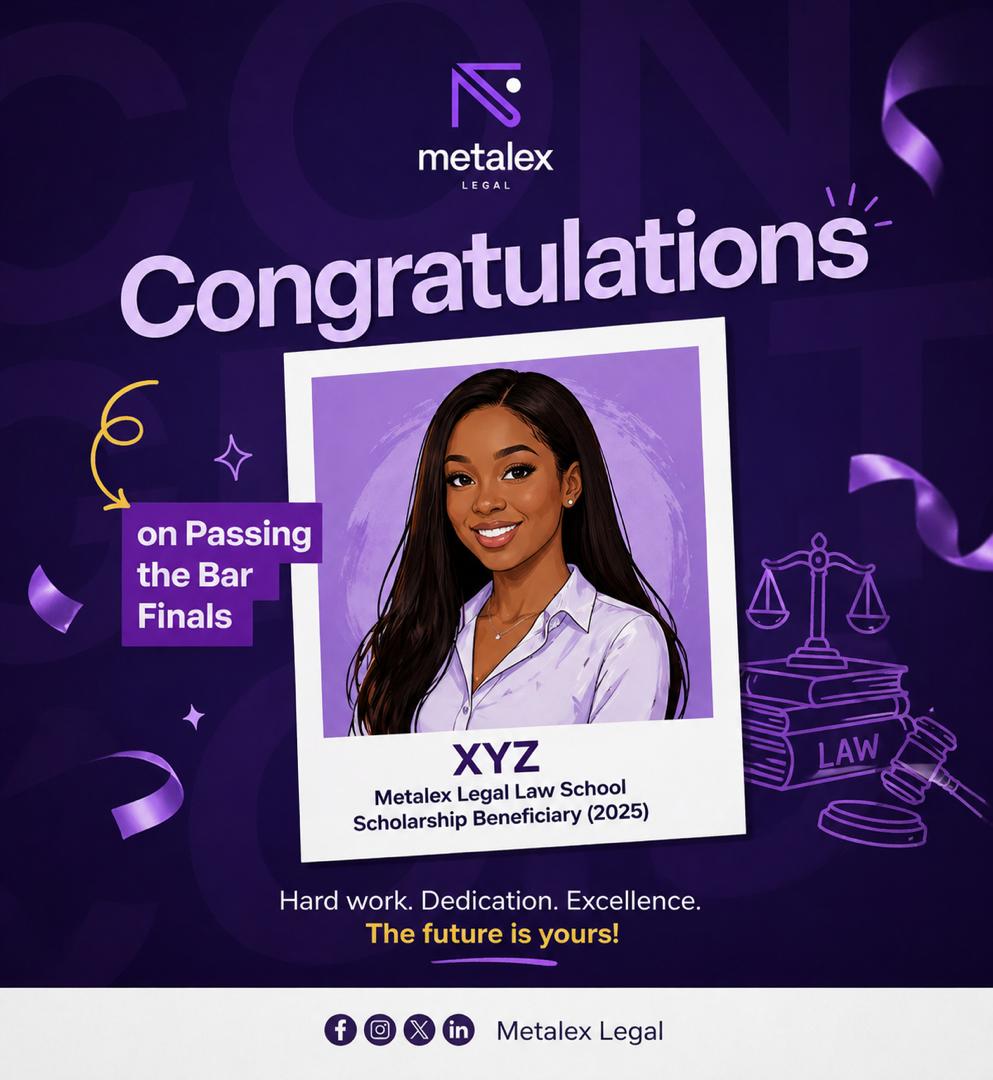
As part of our scholarship programme, applicants are required to submit certain materials, including images and, in some cases, video acknowledgments tied to the award process.
These materials are typically used for:
- Announcing beneficiaries
- Documenting impact
- Communicating the programme to the public
However, a situation recently arose where a beneficiary, after receiving the scholarship, objected to the continued public use of their image and video content.
This raised an important legal and ethical question:
Does participation in a programme automatically translate to consent for public use of personal data?
The Legal Framework
Under the Nigeria Data Protection Act 2023, personal data must be processed based on a valid legal basis. These include:
- Consent
- Contractual necessity
- Legal obligation
- Legitimate interest
For many organisations, consent is the most relied-upon basis. But the NDPA makes one thing clear:
Consent must be specific, informed, and freely given; and importantly, it can be withdrawn.
This introduces a layer of complexity, particularly in contexts like:
- Scholarships
- Employment
- Grants and fellowships
Where participation requirements and public communication often intersect.
Where the Tension Lies
In practice, organisations often operate on an assumption:
“If you applied, participated, and benefited, then you agreed.”
But legally, that assumption may not always hold, especially where:
- Consent for publicity was not explicitly separated from programme participation
- Individuals later withdraw consent
- Data is used beyond its original or clearly defined purpose
This creates a tension between:
- Institutional transparency and storytelling, and
- Individual privacy rights
Lessons for Organisations
This situation offers important lessons, not just for scholarship providers, but for employers, startups, NGOs, and institutions:
1. Separate Participation from Publicity
Do not bundle:
- Application requirements
with - Media/public use consent
Each should stand on its own.
2. Make Consent Explicit and Granular
Instead of broad assumptions, clearly state:
- Where content will be used
- How long it will be used
- Whether it will appear on social media, websites, or ads
3. Plan for Withdrawal of Consent
Even where consent exists:
- Individuals can withdraw it
- Organisations must be prepared to respond appropriately
4. Understand Lawful Alternatives
Where consent becomes uncertain, organisations may consider:
- Contractual necessity
- Legitimate interest
But these must be applied carefully and lawfully.
The Metalex Position
At Metalex Legal, we believe that:
- Supporting individuals through initiatives like scholarships is important
- Communicating impact is also important
- But respecting data rights is non-negotiable
Following this experience, we have taken steps to:
- Review our current data usage practices
- Reassess how beneficiary content is collected and used
- Strengthen our internal compliance with the NDPA
Our Way Forward
Going forward, the Metalex Legal Scholarship will incorporate:
- Clear media release provisions separate from application requirements
- Explicit consent mechanisms for publicity and promotions
- Defined usage scope and timelines
- Improved communication with beneficiaries on their rights
Our goal is simple:
To build a system that is both impact-driven and legally sound.
This moment is a reminder that law is not just about disputes, it is about evolution.
As organisations grow and engage more publicly, the need to align good intentions with legal compliance becomes critical.
The Nigeria Data Protection Act 2023 is not just a regulatory framework, it is a guide for building trust in a digital society.
And for us at Metalex Legal, this is not just a lesson learned.
It is a standard we are committed to upholding.
If your organisation collects or uses personal data; whether for employment, scholarships, or marketing—now is the time to review your compliance framework.