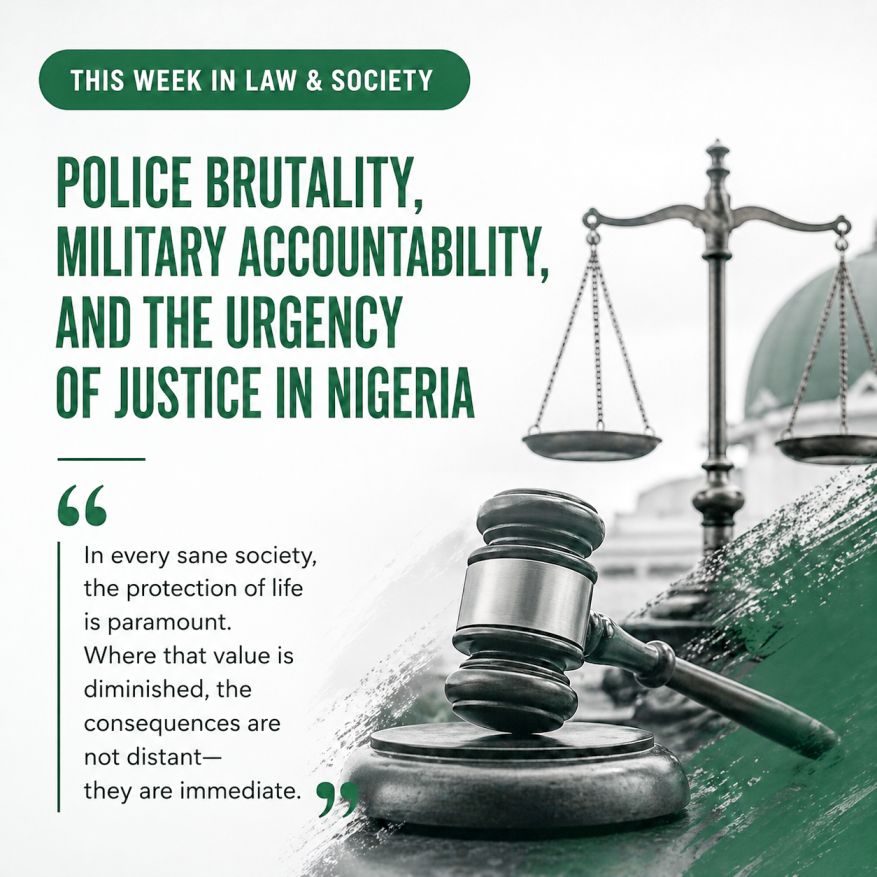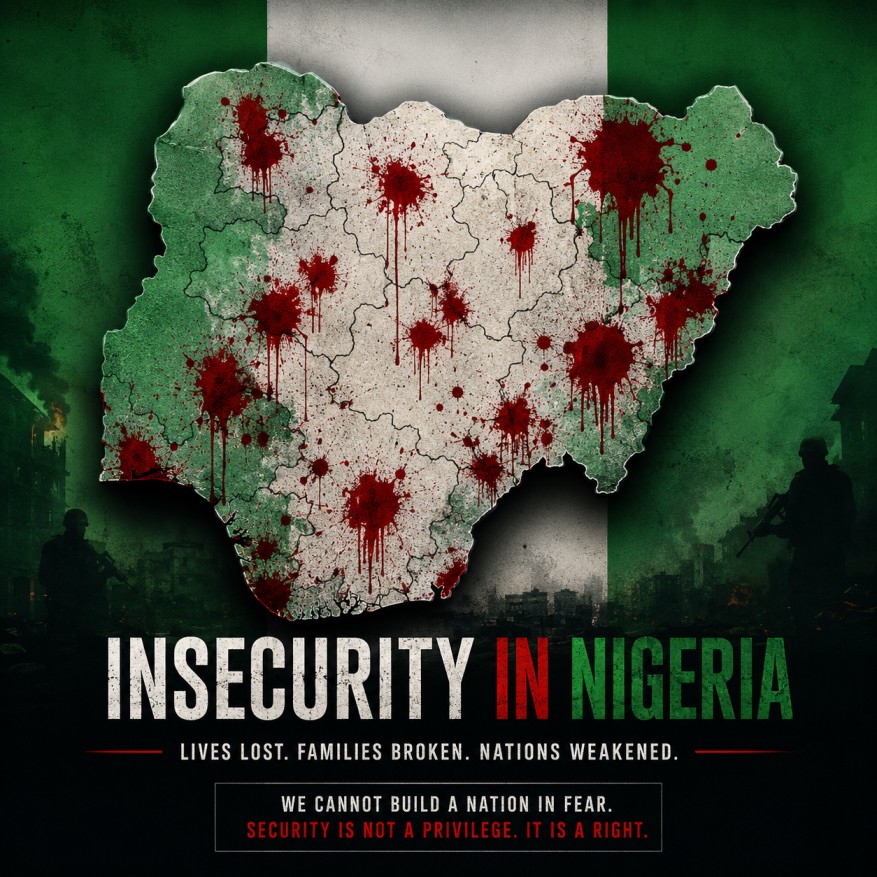
Not long ago, when Nigerians heard news of attacks, kidnappings, or killings, most of it felt like it was happening far away; in some other town, to some other family. There was sadness, of course, but also a kind of distance. That distance no longer exists. Today, it is hard to let a week go by, and increasingly, a single day without a report of violence somewhere in the country. The news is no longer distant.
People are making small, quiet changes to how they live, and those changes say a great deal about where things stand. A family thinks carefully before a long drive, a farmer hesitates before going to his land, and a young graduate starts looking at options abroad, not out of ambition alone, but out of a genuine sense that staying may be the riskier choice. Japa once a light-hearted expression for relocating, has taken on a more serious meaning for many people. It has become, for some, a reasonable response to an unreasonable situation.
It Goes Beyond Lives Lost
The most visible cost of insecurity is the lives it takes, and that alone should be enough to demand urgent attention. But the damage runs further than what makes the headlines. When people do not feel safe, they stop doing the ordinary things that keep a society moving. They invest less, trade less, travel less, and plan less. Businesses close or never open in the first place. Food production drops because farmers cannot work their land freely, and that shortage eventually reaches the market. Jobs disappear. The overall effect is a country slowly draining the energy it needs to grow.
What makes this especially painful is that so many Nigerians are still trying. Young people are still starting businesses, building skills, and creating opportunities in spite of difficult circumstances. That kind of resilience deserves a stable environment to grow in. Instead, insecurity keeps cutting the ground from under their feet.
"When people do not feel safe, they stop doing the ordinary things that keep a society moving."
The Gap Between Leadership and Everyday Life
There is a frustration that many Nigerians carry quietly, and it is this the people responsible for fixing these problems have largely insulated themselves from them. Many in political leadership have access to private security, send their children to school abroad, travel for medical care overseas, and live in ways that shield them from the everyday risk that ordinary citizens face. They know what a well-functioning society looks like because they experience it; just not here in Nigeria.
That gap between how leaders live and how the people they govern live does real damage to trust. It is not just about comfort or lifestyle. It signals a lack of shared stakes. When those making decisions do not bear the consequences of poor security, there is less pressure to treat it as the emergency it is. Nigerians see this clearly, and it adds frustration on top of fear.
Security Is More Than Soldiers on the Road
It is worth being clear about what addressing insecurity actually requires, because the conversation in Nigeria too often stays at the surface. Armed presence is part of it, but modern security depends on much more good intelligence, the ability to gather and use data, fast and coordinated responses between agencies, and officers who are properly trained, fairly paid, and held accountable for how they do their jobs. It also requires honest institutions that the public can actually trust.
Many countries that have improved their security situations did so not simply by deploying more forces, but by building smarter, more professional systems over time. Nigeria has the talent and the resources to do the same. What has been missing too often is the institutional will to treat this as a long-term national priority rather than a short-term political issue.
Real People, Not Just Numbers
It is easy for these conversations to become abstract policy debates about institutions and frameworks, statistics about attack frequencies and displacement figures. That abstraction is dangerous because it quietly removes the human reality from the centre of the discussion. Every statistic in the insecurity story is a person. Someone's father who did not come home, a young woman who was taken while returning from the market. A teacher whose school closed because it was no longer safe. A family that rebuilt once, and is wondering if they have the strength to do it again. These are the people the conversation must stay anchored to, because they are ultimately the reason any of this matters.
“Every statistic in the insecurity story is a person.”
What Government Must Do
Protecting the lives of its citizens is the most basic duty of any government. Everything else; development, economic growth, education, opportunity depends on that foundation being in place. A government that cannot provide basic safety loses the moral authority to govern, and over time it also loses the practical ability to, as public confidence collapses and alternatives, whether migration, community self-help, or worse fill the vacuum.
The Nigerian government must treat insecurity with the seriousness it deserves: real investment in security institutions, honest accountability for failure, better conditions for the men and women working in security, and a genuine commitment to rebuilding the trust of a population that has every reason to be skeptical. These are not small asks, but they are necessary ones. Citizens are not asking for the impossible. They are asking for the basic.
Citizens Have a Role Too
None of this means ordinary Nigerians are simply waiting to be saved. Communities across the country have shown remarkable courage; looking out for one another, speaking up, demanding better, and refusing to let violence have the final word. That spirit matters and should not be taken for granted. Civic engagement, peaceful accountability, and a collective rejection of violence are things citizens can contribute, even as they rightfully expect more from their government. A safer Nigeria will need both, an accountable government and an active, engaged society.
Why This Matters to Us
At Metalex Legal, we work within the law every day, but we are also aware that law does not exist in a vacuum. It operates within a society, and the health of that society shapes everything, including what justice is able to mean in practice. We cannot speak about rights, institutions, or the rule of law without also being honest about the conditions Nigerians are living in right now. Choosing silence on those conditions would be its own kind of statement, and not one we are willing to make.
Nigeria is a country with real strengths; creative, resourceful, resilient people who have achieved remarkable things under difficult circumstances. We write this because we believe those strengths deserve better conditions in which to flourish. Not perfect conditions. Just safe ones.
A country is not measured by what it promises its people. It is measured by whether ordinary people; not the powerful, not the protected can go about their lives without fear. By that measure, Nigeria has serious work to do. The good news is that the capacity for change is real. But it requires honesty about where things stand, urgency about what needs to happen, and leaders who are willing to be held to account for the results. Nigerians deserve nothing less than that.